
The Time Drain of Manual Pricing
If you’ve ever felt that pricing tasks swallow entire afternoons, you’re not imagining it. The process may look simple from the outside, yet underneath, it’s packed with repetitive checks, constant updates, and the quiet stress of knowing one missed change could cost revenue.
Here’s the thing: the hidden drag isn’t only the workload. It’s the mental fragmentation. You jump between dashboards, notes, and spreadsheets, and every small interruption resets your focus. Operators tell us this is the part that wears them down the most.
Manual Data Entry and Analysis
Collecting competitor rates, cross-referencing segments, checking availability, all of it demands precision. But doing it by hand introduces tiny inconsistencies. Maybe a column isn’t updated. Maybe a rate is copied over incorrectly. It doesn’t matter how experienced you are; manual systems create small slips that have big ripple effects.
And it’s not just the work itself. It’s the time. The slow accumulation of 10-minute checks that mysteriously turn into an hour. You know what? That’s often the part leaders underestimate until they track it.
Constant Rate Adjustments
Markets shift all day. Competitors tweak their prices. Flights change. Local events appear. The problem with manual pricing is simple: the world moves faster than your keyboard.
So you react. Then react again. And again. Before you know it, you’re running behind the market instead of steering the strategy.
That constant chase drains energy you could spend elsewhere: fleet planning, customer experience, partnerships, or actually having a clear view of tomorrow instead of babysitting the present.
Introducing Automated Pricing with RateMonitor Elite
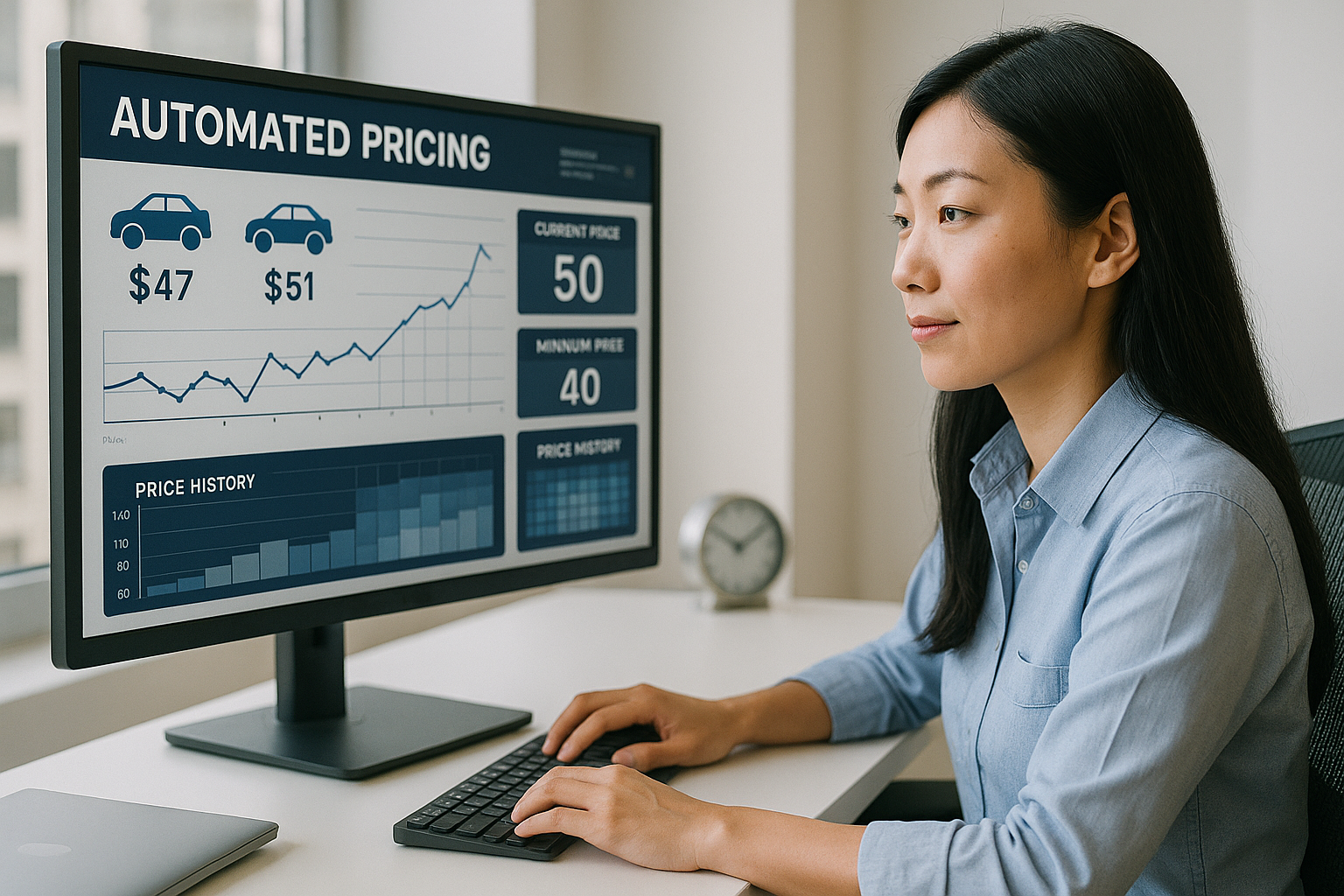
Automation shifts the dynamic. Instead of you adjusting pricing all day, you set the strategy once and let the system do the heavy lifting. The rhythm changes completely, from “constant vigilance” to “controlled oversight.”
Setting Tactics and Triggers
You define thresholds, segments, competitor sets, behaviors, and price boundaries. It’s like giving your pricing plan a compass and a map.
The system handles the monitoring piece: demand, competitor moves, anomalies, opportunities. When something triggers your conditions, it acts immediately.
Some operators even compare it to having a pricing analyst living inside the dashboard, working 24/7 without losing focus.
Automated Updates and Alerts
Once rules are live, RateMonitor updates your prices automatically or notifies you when an exception needs a human decision. You no longer scan screens for tiny changes; you only step in where your expertise adds genuine value.
And honestly, that’s how modern revenue management is supposed to feel — less firefighting, more strategic clarity.
The Benefits of Automation
Automation isn’t just about moving faster; it’s about shifting your energy to where it matters.
Increased Efficiency
Operators usually notice the speed first. Tasks that used to take hours now compress into minutes. Instead of bouncing between tools, you let the system maintain continuous monitoring while you stay focused on bigger objectives.
Reduced Errors
When rules govern the process, consistency improves. No typos, no overlooked events, no forgotten updates. It’s a steady, reliable workflow that protects your margins.
More Time for Strategic Initiatives
This is the underrated win. You get back mental bandwidth.
You regain the ability to plan ahead.
You finally have the space for projects that shape long-term success instead of sinking time into repetitive checks.
And you know what? Most operators only realize how much time pricing was stealing once they let automation take over.
Curious to see RateMonitor in action? Reach out and book your demo now!